
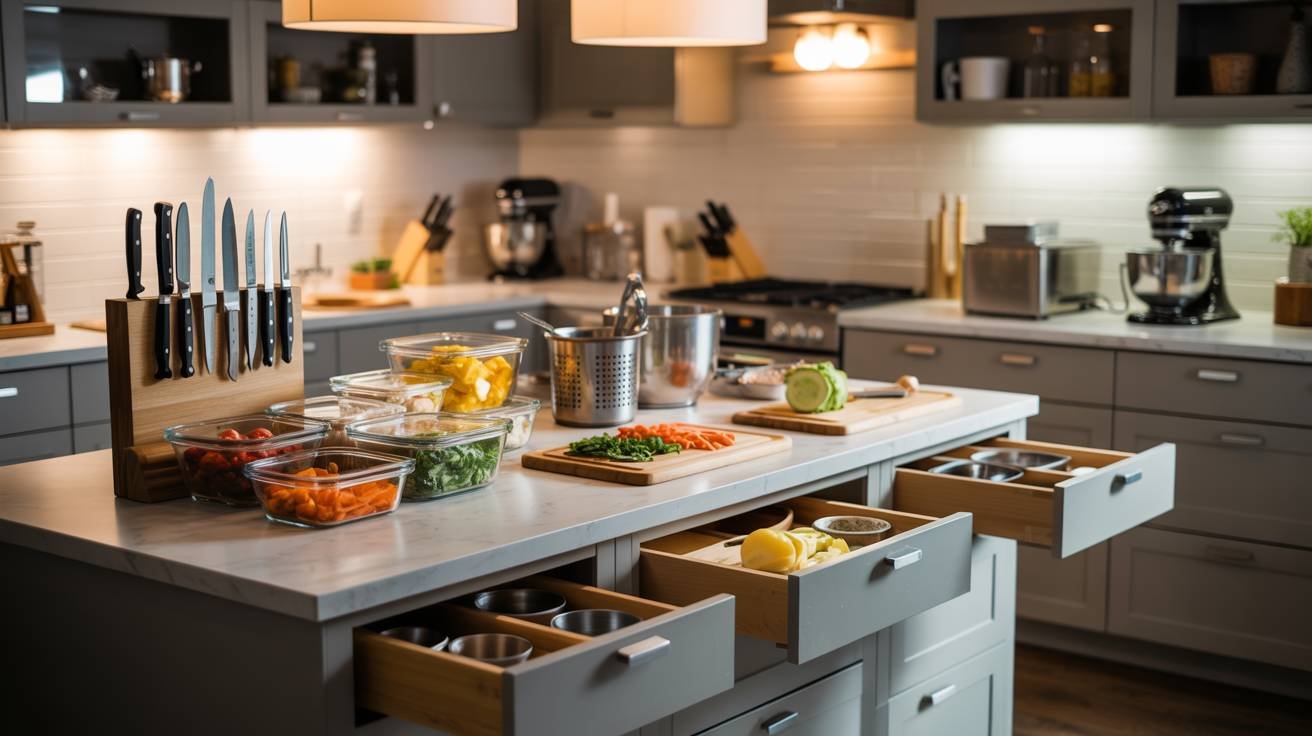
Imagine stepping into a kitchen where every tool, ingredient, and surface is perfectly positioned to streamline your cooking process. The aroma of fresh herbs fills the air, your favorite knife is within arm’s reach, and the countertops gleam with purpose. This isn’t just a dream; it’s the reality of a well-organized, functional kitchen designed for efficiency and meal prep. In this guide, we’ll walk you through the essential steps to transform your kitchen into a culinary powerhouse.
1. Assess Your Space and Define Your Needs
Before diving into the world of kitchen gadgets and organization systems, take a moment to assess your space. Walk through your kitchen and identify areas that feel cramped, cluttered, or underutilized. Are there corners gathering dust? Is your countertop space limited? Understanding these pain points is the first step toward creating a functional kitchen.
Next, define your cooking habits. Do you prepare elaborate meals daily, or are you more inclined toward quick, simple dishes? Perhaps you prefer batch cooking on weekends to save time during the week. Your cooking style will dictate the layout and organization of your kitchen. For instance, if you often bake, ensure you have ample counter space and storage for baking tools. If you’re a meal prep enthusiast, designate areas for chopping, mixing, and storing prepped ingredients.
By aligning your kitchen’s layout with your cooking habits, you set the foundation for a space that works with you, not against you.
2. Optimize Your Layout for Workflow
The layout of your kitchen plays a crucial role in its functionality. A well-thought-out design minimizes unnecessary movements and enhances efficiency. Consider the classic kitchen work triangle: the relationship between the stove, sink, and refrigerator. These three elements should form a triangle, allowing for smooth transitions between tasks.
Place frequently used items within easy reach. For example, keep your most-used knives and utensils in drawers near the prep area. Store pots and pans close to the stove, and ensure that cutting boards and mixing bowls are readily accessible. This thoughtful arrangement reduces time spent searching for tools and ingredients, allowing you to focus on the cooking process.
Don’t forget about vertical space. Utilize wall-mounted racks for hanging utensils or spices, and consider installing shelves above counters to store items you use less frequently. This approach frees up valuable counter space and keeps essential tools within arm’s reach.
3. Invest in Quality Tools and Equipment
Quality kitchen tools are an investment that pays off in the long run. A sharp chef’s knife, sturdy cutting board, and durable cookware can make meal preparation more efficient and enjoyable. When selecting tools, prioritize functionality and durability over aesthetics.
For instance, a high-quality chef’s knife can handle a variety of tasks, from chopping vegetables to slicing meat. A non-stick skillet ensures easy cooking and cleaning, while a heavy-duty blender can tackle everything from smoothies to soups. Investing in these essentials means fewer replacements and a more streamlined cooking process.
Additionally, consider tools that align with your cooking style. If you often bake, a set of measuring spoons and cups, along with a reliable mixer, will be invaluable. For those who meal prep, containers of various sizes and labels can help keep ingredients organized and fresh.
4. Establish an Efficient Storage System
Cluttered cabinets and overcrowded drawers can hinder your cooking efficiency. Establishing an organized storage system ensures that everything has its place, reducing time spent searching for items and minimizing kitchen chaos.
Start by decluttering. Remove items you rarely use or duplicates of tools. Once you’ve pared down your collection, categorize your items. Group similar tools together, such as all baking equipment in one area and all cooking utensils in another. Use drawer dividers to keep utensils separated and easy to access.
For pantry items, consider clear, labeled containers that allow you to see contents at a glance. Store frequently used spices and ingredients at the front of shelves, and reserve the back for items with longer shelf lives. This system ensures that you can quickly locate what you need, streamlining your cooking process.
5. Prioritize Cleanliness and Maintenance
A clean kitchen is not only more pleasant to work in but also safer and more efficient. Regular cleaning and maintenance prevent the buildup of grime and ensure that your tools and appliances function optimally.
Establish a routine for cleaning surfaces, washing dishes, and wiping down appliances. After each meal, take a few minutes to tidy up, preventing messes from accumulating. Regularly inspect your tools and equipment for signs of wear and tear. Sharpen knives as needed, replace worn-out cutting boards, and service appliances to keep them in good working condition.
By maintaining a clean and well-maintained kitchen, you create an environment that fosters efficiency and enhances your cooking experience.
6. Incorporate Smart Technology
In today’s digital age, smart technology can enhance your kitchen’s functionality. From smart refrigerators that track inventory to voice-activated assistants that set timers, integrating technology can streamline your cooking and meal prep processes.
Consider investing in appliances that offer smart features. A refrigerator with a built-in camera allows you to check its contents remotely, ensuring you never forget an ingredient during grocery shopping. Smart ovens can be preheated remotely, and some even offer cooking presets for specific dishes.
Additionally, utilize apps that assist with meal planning and grocery shopping. Many apps allow you to create shopping lists, find recipes based on available ingredients, and track nutritional information. These tools can save time and reduce the stress associated with meal planning.
7. Designate Meal Prep Zones
Meal prepping is a time-saving strategy that involves preparing meals or ingredients in advance. To make this process efficient, designate specific areas in your kitchen for meal prep tasks.
Set up a chopping station with a large cutting board, sharp knives, and bowls for collecting prepped ingredients. Have a separate area for mixing and marinating, equipped with mixing bowls, measuring spoons, and storage containers. By creating these designated zones, you streamline the meal prep process and reduce the likelihood of cross-contamination.
Ensure that each zone is stocked with the necessary tools and ingredients. For example, your chopping station should have a variety of knives for different tasks, while your mixing area should have a selection of bowls and utensils. This organization allows you to move seamlessly from one task to the next, making meal prep more efficient and less time-consuming.
8. Personalize Your Space
While functionality is paramount, don’t forget to infuse your personality into your kitchen. A space that reflects your style can make cooking more enjoyable and inspire creativity.
Incorporate elements that bring you joy, such as colorful dishware, unique utensils, or artwork that resonates with you. Choose a color scheme that appeals to you and consider adding plants for a touch of greenery. Personalizing your kitchen creates an environment that feels welcoming and motivating.
Remember, a kitchen that reflects your personality can make the cooking process more enjoyable and inspire you to try new recipes and techniques.
9. Stay Adaptable and Open to Change
As your cooking habits evolve, so should your kitchen. Stay adaptable and open to making changes that enhance efficiency and meet your current needs.
Regularly assess your kitchen’s layout and organization. Are there new tools or appliances that would improve your cooking experience? Perhaps your meal prep routine has changed, requiring a different setup. By staying attuned to your needs and making adjustments as necessary, you ensure that your kitchen remains a functional and enjoyable space.
Embrace the idea that your kitchen is a dynamic environment. As your culinary skills and preferences grow, your kitchen should evolve to support and inspire you.
10. Seek Inspiration and Continuous Improvement
Don’t hesitate to seek inspiration from various sources. Cookbooks, online platforms, and fellow cooking enthusiasts can offer valuable insights and ideas for enhancing your kitchen’s functionality.
Attend cooking workshops or classes to learn new techniques and discover tools that can improve your cooking process. Engage with online communities to share experiences and gather tips from others. By continuously seeking inspiration and striving for improvement, you keep your kitchen dynamic and aligned with your culinary goals.
Remember, the journey to a functional kitchen is ongoing. Stay curious, keep learning, and adapt as needed to create a space that supports your cooking endeavors.
If you want to ensure your home stays pristine, consider integrating cleaning tasks into your routine, much like how physical education colleges emphasize structure in their programs.
As you enhance your kitchen’s efficiency, don’t forget about maintaining the comfort of your home environment; for instance, if your air conditioner starts blowing hot air, addressing the issue promptly can keep your cooking space pleasant. If you’re facing this common problem, you might want to explore how to fix the cooling instantly to ensure the ideal atmosphere for culinary creativity.
