
In the rapidly evolving educational landscape, where traditional teaching methods often fall short of preparing students for the complexities of the modern world, inquiry-based STEM projects have emerged as a transformative approach. These projects not only ignite curiosity but also cultivate critical analytical skills essential for navigating the challenges of the 21st century. As educational institutions strive to foster environments that promote deep learning and problem-solving abilities, the integration of inquiry-based STEM initiatives has become imperative. This article delves into the profound impact of these projects on students’ analytical capabilities, emphasizing their role in shaping adept thinkers and problem solvers.
The Essence of Inquiry-Based Learning in STEM Education
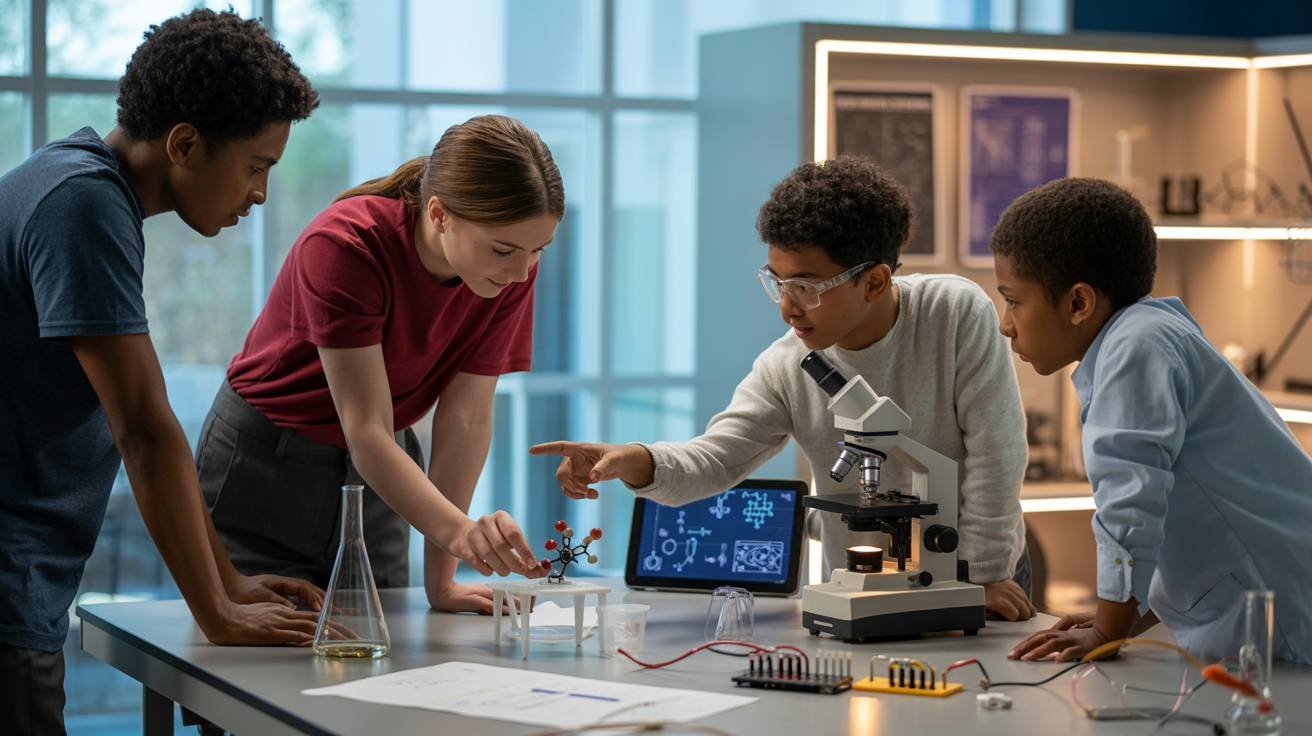
Inquiry-based learning stands in stark contrast to traditional rote memorization techniques. It centers on the student’s active role in the learning process, encouraging them to pose questions, investigate solutions, and construct their understanding through exploration. In STEM education, this approach is particularly potent, as it mirrors the real-world processes of scientific discovery and technological innovation. Students engage in hands-on projects that require them to hypothesize, experiment, and analyze outcomes, thereby fostering a deeper comprehension of scientific principles and mathematical concepts. This method not only enhances knowledge retention but also develops critical thinking skills that are transferable across various disciplines.
Development of Critical Thinking and Problem-Solving Abilities
One of the most significant advantages of inquiry-based STEM projects is their ability to hone critical thinking and problem-solving skills. By confronting students with open-ended questions and complex challenges, these projects compel them to think critically about the information at hand. They must evaluate evidence, consider multiple perspectives, and synthesize data to arrive at well-reasoned conclusions. This process mirrors the analytical tasks professionals encounter in scientific research, engineering design, and technological development. As students navigate these challenges, they learn to approach problems methodically, breaking them down into manageable components and devising strategic solutions. Such experiences are invaluable in cultivating a mindset geared toward innovation and effective problem resolution.
Enhancing Collaboration and Communication Skills
Modern STEM projects often necessitate collaboration, as many real-world problems require diverse expertise and teamwork. Inquiry-based projects encourage students to work together, pooling their knowledge and skills to tackle complex issues. This collaborative environment fosters the development of communication skills, as students must articulate their ideas clearly, listen to others, and integrate feedback constructively. Effective communication is crucial in STEM fields, where the ability to convey complex concepts to varied audiences can determine the success of a project. Through group discussions, presentations, and peer evaluations, students refine their ability to express ideas persuasively and engage in constructive dialogue, preparing them for future professional environments.
Real-World Applications and Career Readiness
Inquiry-based STEM projects bridge the gap between theoretical knowledge and real-world application. Students are tasked with addressing authentic problems, often simulating scenarios they might encounter in their future careers. Whether designing a sustainable energy solution, developing a software application, or conducting environmental research, these projects provide practical experience that is directly applicable to various professions. This hands-on approach not only solidifies their understanding of STEM concepts but also enhances their employability by equipping them with skills that are highly valued in the workforce. Employers increasingly seek individuals who can think critically, collaborate effectively, and apply their knowledge to solve real-world problems, all of which are cultivated through inquiry-based STEM education.
Integration of Technology in Inquiry-Based Projects
The integration of technology into inquiry-based STEM projects has revolutionized the learning experience. Tools such as simulation software, data analysis programs, and collaborative platforms enable students to conduct experiments, analyze data, and communicate findings more efficiently. These technologies not only facilitate a deeper understanding of STEM concepts but also mirror the tools used by professionals in the field. By incorporating technology, students gain familiarity with the resources they will encounter in their careers, enhancing their digital literacy and technical proficiency. Moreover, technology allows for more dynamic and interactive learning experiences, keeping students engaged and motivated throughout the project.
Assessment and Reflection in Inquiry-Based Learning
Assessment in inquiry-based STEM projects extends beyond traditional tests and quizzes. It encompasses a holistic evaluation of the student’s process, including their approach to problem-solving, collaboration, and application of knowledge. Reflective practices are integral, as students are encouraged to assess their own learning journey, identify areas for improvement, and set goals for future projects. This reflective process promotes metacognition, allowing students to become more aware of their thinking patterns and learning strategies. Such self-awareness is crucial for continuous improvement and lifelong learning, as it enables students to adapt and refine their approaches to new challenges.
Challenges and Considerations in Implementation
While the benefits of inquiry-based STEM projects are evident, their implementation can present challenges. Educators may face constraints such as limited resources, time constraints, and the need for professional development to effectively facilitate these projects. Additionally, students accustomed to traditional learning methods may initially struggle with the open-ended nature of inquiry-based tasks. Overcoming these challenges requires a commitment to providing adequate support, resources, and guidance to both educators and students. Institutions must invest in training programs for teachers, ensuring they are equipped with the skills and knowledge to implement inquiry-based projects successfully. Furthermore, fostering a culture that values exploration and experimentation can help students embrace the uncertainties inherent in the inquiry process.
The Role of Governance in Higher Education in Supporting Inquiry-Based STEM Education
Effective governance in higher education plays a pivotal role in supporting and promoting inquiry-based STEM education. Institutional policies, funding allocations, and strategic planning influence the extent to which inquiry-based projects can be integrated into curricula. Governance structures that prioritize innovation, interdisciplinary collaboration, and research-driven teaching are more likely to foster environments conducive to inquiry-based learning. Additionally, partnerships with industry and community organizations can provide real-world problems for students to solve, enhancing the relevance and impact of their projects. By aligning governance strategies with the goals of inquiry-based STEM education, institutions can create sustainable frameworks that support the development of analytical skills in students.
Future Directions and the Evolving Landscape of STEM Education
The landscape of STEM education is continually evolving, driven by advancements in technology, shifts in societal needs, and the growing demand for skilled professionals in STEM fields. Inquiry-based learning is poised to remain at the forefront of this evolution, adapting to new challenges and opportunities. Future STEM projects may incorporate emerging technologies such as artificial intelligence, biotechnology, and renewable energy solutions, providing students with cutting-edge tools to explore and innovate. Moreover, as global challenges become more complex, interdisciplinary approaches will be essential, requiring students to draw connections across various fields of study. The future of STEM education lies in fostering adaptable, creative, and analytical thinkers who can navigate and address the multifaceted issues of the modern world.
