
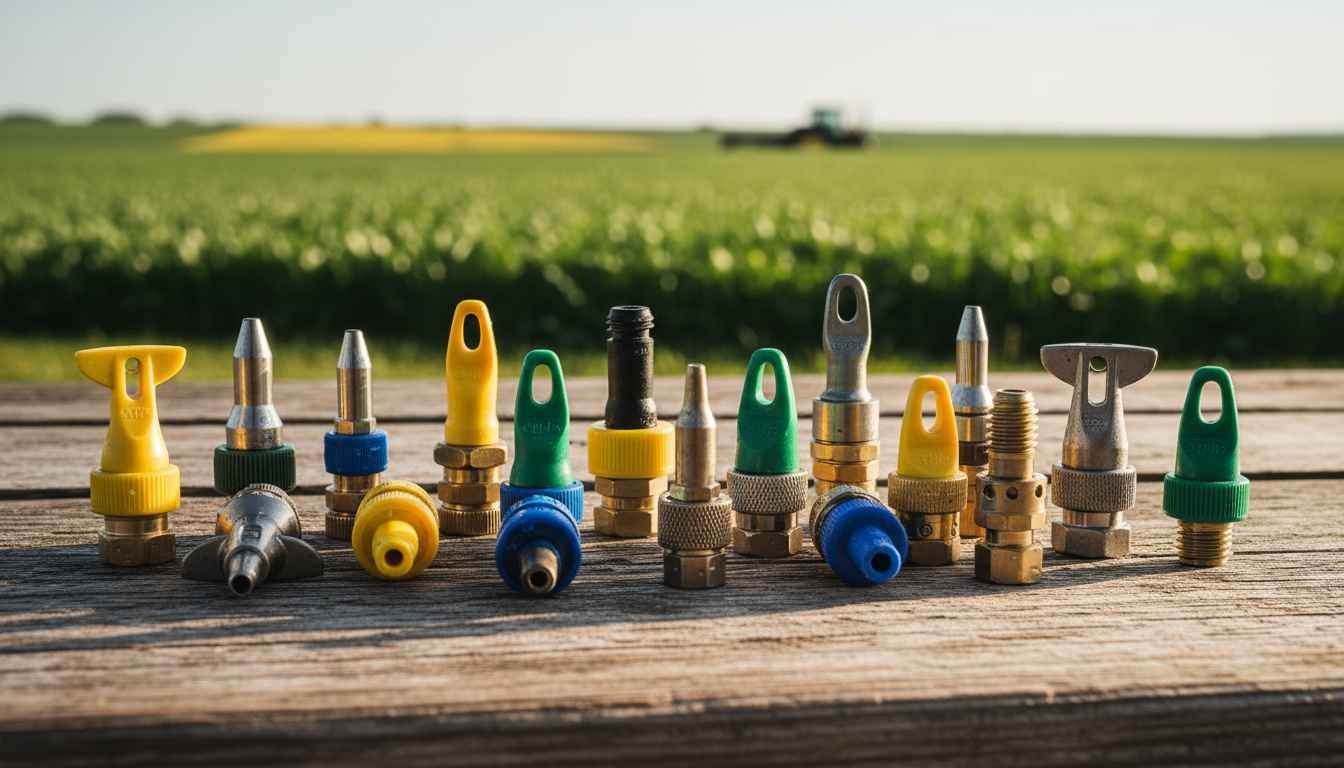
Forget everything you know about spraying crops. Agricultural spray nozzles are not just metal tips on a boom – they are precision instruments that determine how effectively your crops receive treatment. From minimizing chemical waste to ensuring uniform coverage, these devices play a pivotal role in modern farming.
Who is this for?
This guide is tailored for farmers, agronomists, and agricultural equipment enthusiasts seeking a deeper understanding of spray nozzle technology. If you manage large-scale crop operations or are responsible for implementing efficient pest and nutrient management strategies, this information is essential. Engineers and designers working on agricultural machinery will also benefit from understanding the nuances of nozzle performance.
Understanding the Basics of Spray Nozzles
Agricultural spray nozzles come in various designs, each suited to specific crop types and spray applications. Flat-fan, hollow-cone, and air-induction nozzles dominate the market, but choosing the right type requires more than just identifying the crop. Droplet size, spray pattern, and pressure tolerance all influence how evenly and effectively chemicals are distributed across fields.
Flat-fan nozzles, for example, create a uniform spray ideal for herbicide applications on broadleaf crops. Hollow-cone nozzles generate fine droplets perfect for fungicide coverage in dense canopies, while air-induction nozzles reduce drift by producing coarser droplets. Understanding these differences can save both resources and time during spray operations.
UX Principles in Nozzle Design
While it might seem niche, UX principles are surprisingly relevant in nozzle selection and operation. The ergonomics of nozzle installation, ease of maintenance, and intuitive pressure adjustment mechanisms all impact a farmer’s daily workflow. Nozzles that require frequent recalibration or complicated mounting can slow down operations and increase human error.
Some of the leading agricultural equipment manufacturers, including KUHN, have incorporated modular designs in their nozzle assemblies. These systems allow quick swapping between nozzle types, reducing downtime and simplifying field operations. By applying user-centered design principles, manufacturers ensure that nozzles are not only efficient in performance but also practical and easy to use.
Performance Metrics and Data
Spray coverage uniformity, droplet spectrum, and flow rate are the most critical metrics when evaluating nozzle efficiency. Research conducted by universities and agricultural extension programs indicates that improper nozzle selection can lead to up to 30% chemical waste and uneven crop treatment. By leveraging data-driven approaches to nozzle choice, farmers can maximize input efficiency and minimize environmental impact.
Pressure regulation also plays a key role. Operating nozzles outside their optimal pressure range can cause drift, create uneven droplet sizes, and reduce application efficacy. Monitoring these parameters with integrated sensors or manual gauges ensures consistent spray patterns and reduces costly mistakes.
Potential Drawbacks
Despite their advantages, agricultural spray nozzles have limitations. Coarse droplets reduce drift but may not provide adequate coverage on dense foliage. Conversely, fine droplets offer excellent coverage but are prone to wind drift, leading to potential chemical loss and environmental contamination. Maintenance is another consideration; clogged nozzles can compromise spraying accuracy, necessitating regular inspection and cleaning.
Additionally, the cost of high-end nozzle systems may not be justified for smaller farms or low-volume applications. Farmers must weigh the benefits of precision and efficiency against equipment investment and maintenance demands.
Conclusion
Understanding agricultural spray nozzles goes beyond simply picking the right tip. It involves a combination of crop science, engineering principles, and user-centered design. By focusing on nozzle type, droplet size, pressure, and ergonomics, farmers can improve spraying efficiency, reduce waste, and achieve better crop outcomes. As precision agriculture technologies evolve, staying informed about nozzle innovations will be crucial for maintaining high productivity and sustainability in farming operations.
